- Article
Our hand on the faucets: the Grid2050 Platform
Our in-house monitoring and experimentation platform in Walenstadt
If we see the energy grid as a bucket with various leaks (loads) as well as a growing number of faucets (decentralised renewable energy sources) feeding into it, how can we manage a stable water level? At Walenstadt, we’re doing this through our two-part platform: two tools that allow us, respectively, to peek inside the bucket, and to access the faucets.
Or if we skip the metaphors: we connect to the Walenstadt grid through a centralised interface that gives us access to both information, and control, across the entire infrastructure. That’s the new Grid2050 Platform.
1. Data Visualisation Dashboard
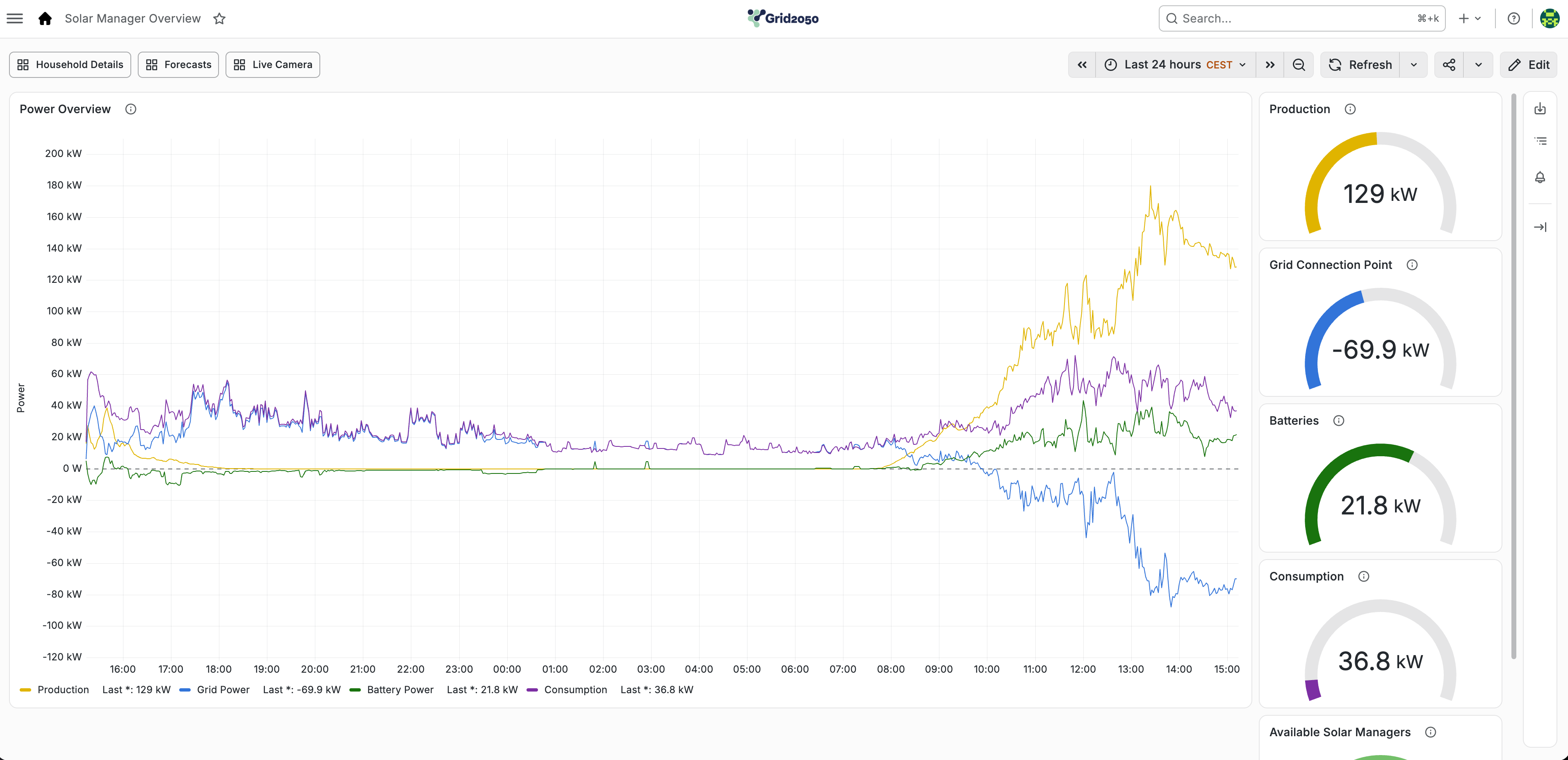
Through the analytics dashboard, based on the open-source web application Grafana, we enjoy an intuitive, powerful visualisation of time-series data. This includes not only measurements from both the grid and home energy systems (HEMs), but also live camera images, geographic information and even forecasts of both the weather, and photovoltaic generation.
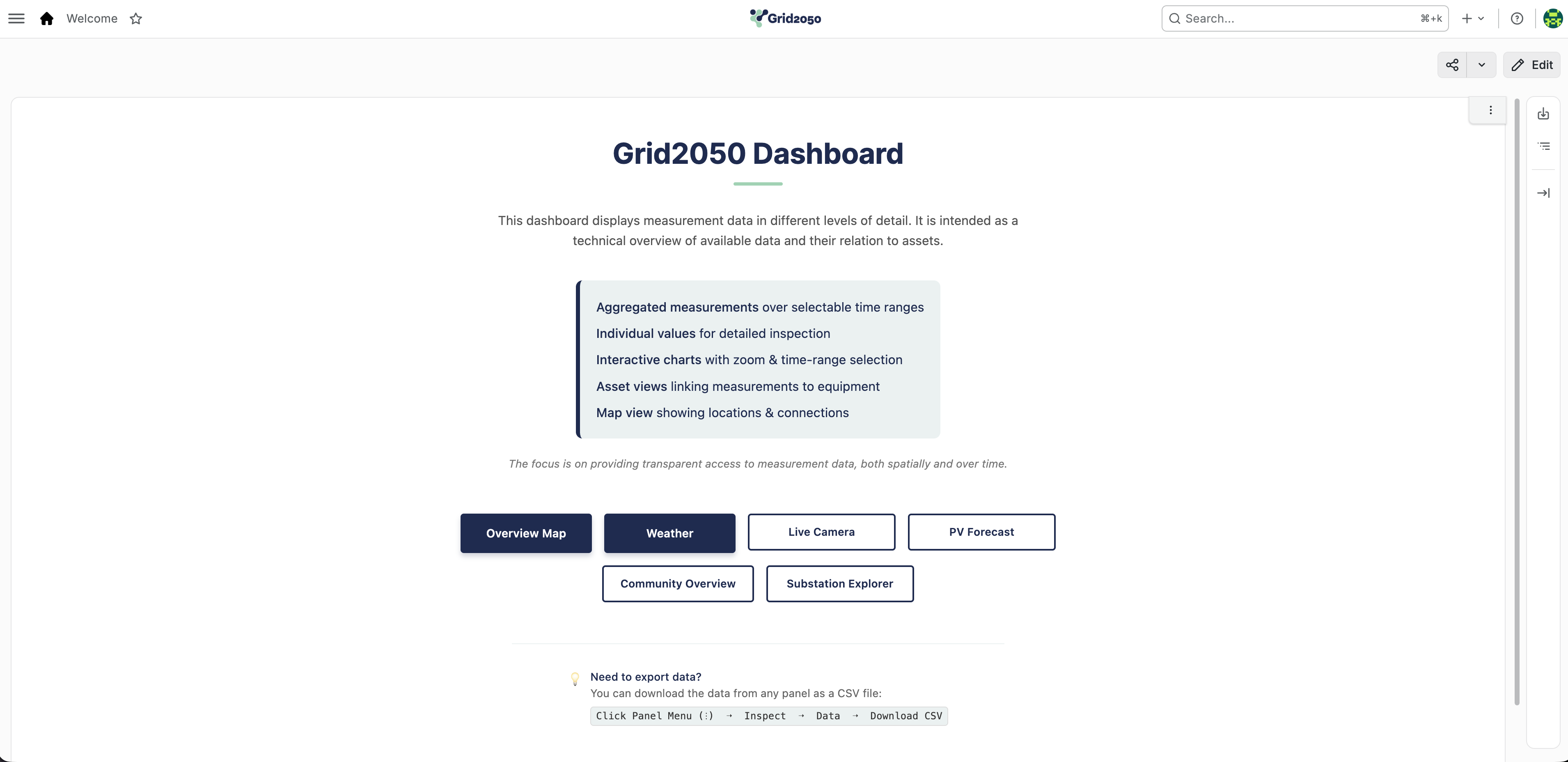
The measurements collected from the HEMs are stored in the same way as measurements from the transformer stations – making the entire data structure more consistent, and simplifying maintenance, access and analysis. The dashboard also enables test community users to gain oversight of how the grid is performing, and how it may affect their own homes.
(We also have a second, entirely separate dashboard, designed for WEW control staff. The one shown here is part of the Grid2050 Platform, bringing all the Walenstadt data to the fingertips of our scientists and Test Community.)
2. Experimentation Hub
Using JupyterHub – a server environment for the web tool Jupyter Notebook – we can go beyond merely viewing data to actually working directly with the database, whether testing custom algorithms or controlling connected devices (such as heat pumps, solar panels, batteries and electric vehicles) in real time.
Access to the various elements of the platform is tied to the user’s role. On Jupyter, for instance, Grid2050 researchers can implement their algorithms for testing on actual devices (subject, of course, to the owner's prior consent). Internal users also have access to an off-the-shelf dataset for offline historical data analysis. This enables them to gain insights without worrying about their algorithms impacting the power grid.
This Grid2050 platform is being continually updated and expanded as part of a larger Walenstadt smartgrid project.